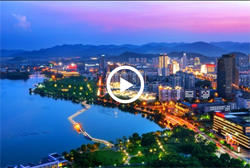

Shaoxing meeting puts spotlight on food waste
About 800 government officials, representatives of international organizations and business representatives discussed food waste and sustainable urban development at a recent meeting in Shaoxing, Zhejiang province.
"Around one-third of all food produced globally is lost or wasted," said Anaclaudia Rossbach, United Nations under-secretary-general and executive director of UN-Habitat, in a video address to the Global Observance of World Cleanup Day 2026 on Sunday. It was the first time the global observance was hosted in China.
Food loss and waste account for up to 10 percent of global greenhouse gas emissions, putting pressure on the climate, natural resources and municipal waste systems, Rossbach said.
The UN General Assembly proclaimed Sept 20 as World Cleanup Day in 2023, and UN-Habitat facilitates the annual observance.
Held under the theme "From Clean Plates to Clean Cities", this year's event brought together government and city representatives, foreign diplomats, representatives of international organizations, academics and business representatives.
"This year's theme reminds us that the journey to sustainable cities starts at home," Rossbach said.
Reducing waste requires better urban planning, accessible essential services and active community participation, she said. City governments oversee waste management, while national governments play a critical role in creating the policies, incentives and investments needed to scale up solutions.
Rossbach also cited food recovery, composting, resource reuse and waste prevention as circular approaches that can reduce emissions, strengthen resilience and create economic opportunities.
Ni Hong, China's minister of housing and urban-rural development, said China has advanced urban renewal, waste sorting and other efforts to encourage greener, low-carbon lifestyles.
He called for more systematic urban governance, broader public participation and stronger international cooperation.
China aims to raise the recycling utilization rate of urban household waste to above 76 percent by the end of 2030, according to the ministry. Waste sorting now covers virtually all residential communities in 297 cities at the prefecture level or above.
In Zhejiang, Hangzhou was selected this year as one of the 20 Cities Towards Zero Waste, an initiative led by the UN Secretary-General's Advisory Board on Zero Waste.
Zhejiang Governor Liu Jie said the province would use the event to deepen international exchanges, draw on practices from China and abroad, advance its green transition and improve living conditions and urban governance.
The opening ceremony also saw the release of outcome documents, including Shaoxing Practice — Global Insights from the Clean Plate Campaign to Clean Cities and the Shaoxing Call to Action.
The call urges stronger global consensus, greater research and development of clean energy and recycling technologies, wider sharing of clean technologies, improved governance standards and closer cooperation among cities.
 Shaoxing stories: Where heritage meets modern life
 2026 Zhejiang Two Sessions
 Sip the Past, Taste the Future